Jul 21, 2026, 6:14 p.m.
3 min read

Summary
- President Donald Trump is said to have made historic concessions in the deal to allow an ethics provision in the crypto Clarity Act that curtails the president’s own activities, and the White House is pushing Democrats to accept it.
- However, the White House hasn’t yet revealed any of the details Trump has agreed to in order to get the crypto bill through the final hurdles of the U.S. Senate.
- So far, Democrats have suggested they’re hesitant to assume this is going to answer their concerns.
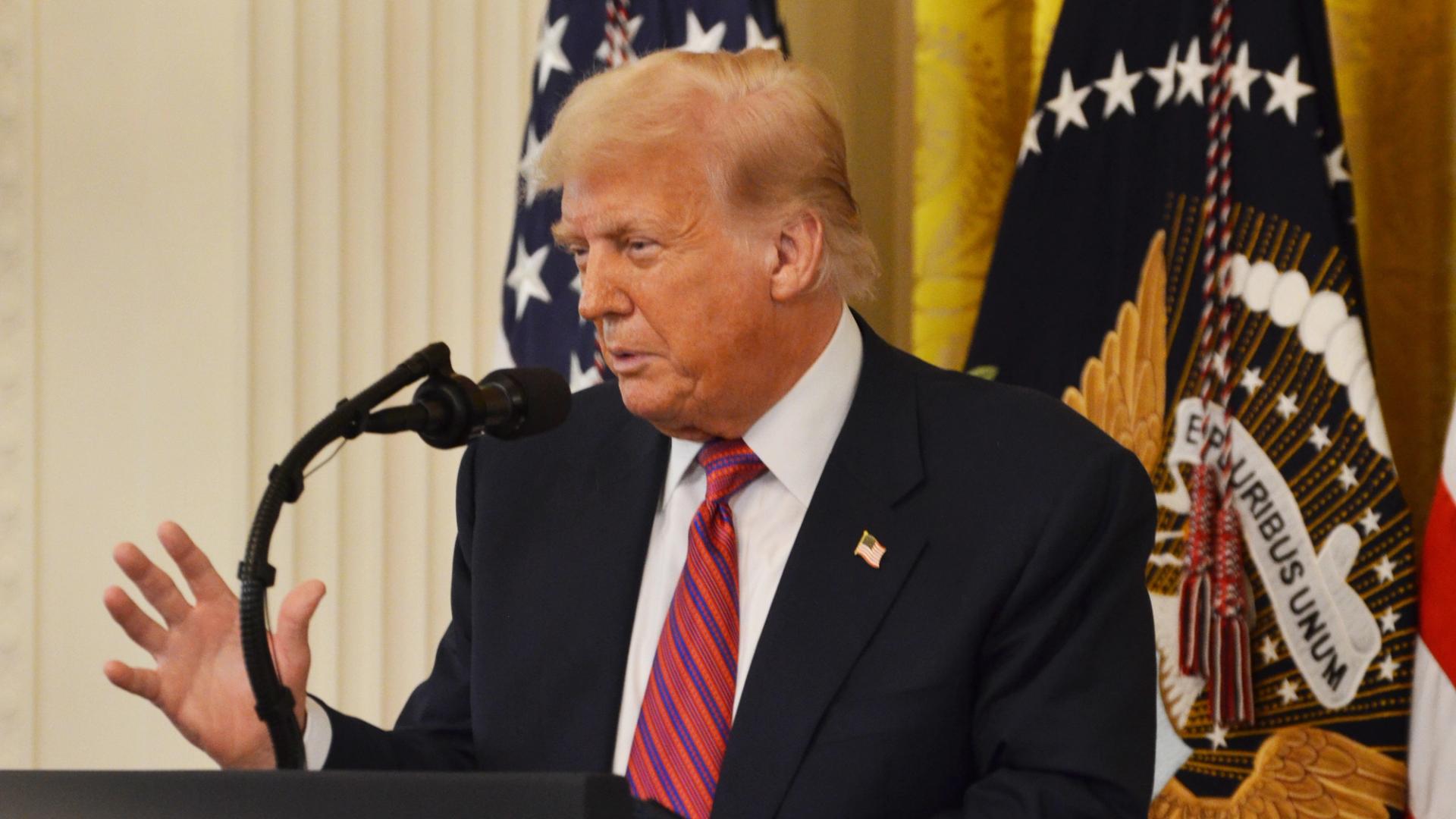
U.S. Senate Democrats need to accept the conflict-of-interest agreement President Donald Trump worked out with Republicans who are trying to settle the last big sticking point in the crypto market structure bill, according to a White House official who spoke on condition of anonymity.
Trump "has agreed to the most comprehensive and wide-ranging ethics provision in history," the official said, though no details have yet emerged on what manner of crypto restrictions Trump may have consented to for the Digital Asset Market Clarity Act and Democrats have been kept out of the loop on this provision.
So far, the release of the final draft of the Clarity Act has been held up several days as negotiators sought to iron out the most significant missing piece — the section that is meant to restrict senior government officials from personal business ties to the crypto industry, including Trump, who is heavily involved.
Democratic lawmakers haven't been briefed on Trump's concession, according to people familiar with the situation, but Republicans and the crypto industry have already begun an aggressive sales campaign for it that paints Democrats as the problem if Clarity doesn't advance.
"If Senate Democrats block this historic legislation after the administration has bent over backward to accommodate their concerns, stakeholders should make no mistake: It is the Democrats who are blocking this legislation because they were never serious about a legislative outcome," the White House official said.
Democratic negotiators such as Senators Kirsten Gillibrand, Ruben Gallego and Angela Alsobrooks reportedly haven't received details of the agreement with Trump, who'd met personally with Republican senators last week. But many of the Democrats have drawn a line in the sand that the ethics provision — driven primarily by Trump's own deep crypto connections — needs to be strong.
The dispute was heightened recently by the president's disclosures that he'd pocketed more than $1 billion last year from his crypto interests.
The White House, Republicans and their crypto industry allies are already building their case against any Democrats who don't accept the new answer to their ethics demands. It's unclear when they'll get to see it.
The industry is expecting full circulation of the Clarity Act legislative language as soon as Tuesday night or Wednesday, though that expectation has been repeatedly delayed since last week.
The Senate has fewer than three weeks to finish the bill, including the ethics piece, and get it through the political gauntlet of a floor vote before lawmakers leave town for their reelection campaigns. There's technically enough time, but even without significant further debate, it would be tight.
As it stands, Senator Alsobrooks told Crypto In America that an ethics enforcement power that relies on the Department of Justice is "unserious," highlighting the unusual position that Trump's stacking of federal law enforcement with loyalists has left such efforts. Democrats are suggesting the DOJ is sufficiently controlled by the president that the Clarity Act's ethics rules may not be used against him if federal authorities are in charge of them. Todd Blanche, Trump's personal lawyer, is currently facing a confirmation process to head up the department.
- 1
- 2
- 3
- 4
- 5
- 6
- 7
- 8
- 9
- 10

In Q2; TRON's stablecoin dominance rose to 28.7%, USDT supply on TRON hit $89B ATH, $89M in protocol fees (2nd to Hyperliquid), TRX +3%, and deepening institutional & agentic reach.
5 hours ago
In Q2; TRON's stablecoin dominance rose to 28.7%, USDT supply on TRON hit $89B ATH, $89M in protocol fees (2nd to Hyperliquid), TRX +3%, and deepening institutional & agentic reach.
Why it matters:
In Q2; TRON's stablecoin dominance rose to 28.7%, USDT supply on TRON hit $89B ATH, $89M in protocol fees (2nd to Hyperliquid), TRX +3%, and deepening institutional & agentic reach.