Updated 6 minutes agoPublished 22 minutes ago
5 min read

Summary
Happy Thursday, advisors!
In today’s newsletter, Dovile Silenskyte from WisdomTree on the two questions investors keep bundling together when they buy bitcoin.
Then, in “Ask an Expert,” Bryan Courchesne from DAiM answers questions about how the failure of the CLARITY Act vote could impact bitcoin as an investment.
Happy reading.
Bitcoin exposure doesn't have to come with a second job
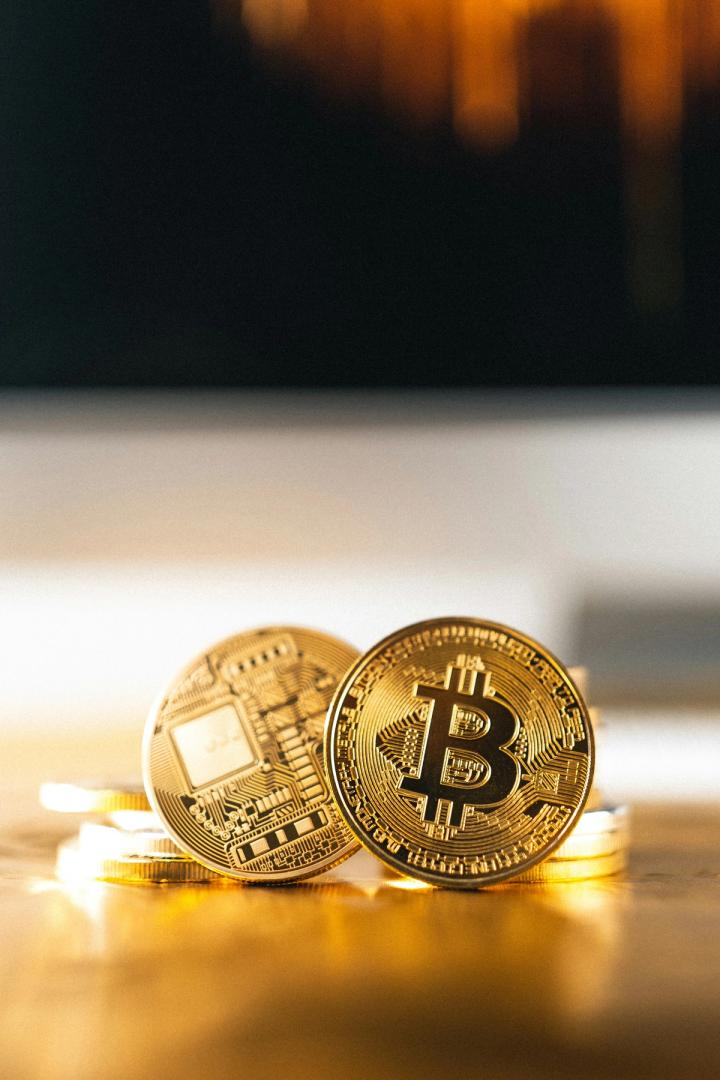
Bitcoin is becoming a more familiar portfolio allocation. But owning it directly can still demand the time, technical judgment and operational discipline of a second job.
The key point is that investors may have clear views on bitcoin’s role within their portfolios without wanting to become their own custodians, cybersecurity teams and protocol analysts.
Self-custody moves risk; it does not eliminate it
“Not your keys, not your coins” is a powerful slogan. It is also incomplete.
With self-custody, the investor must safeguard private keys and recovery phrases, maintain wallet software or hardware, execute transactions correctly and plan for inheritance or incapacity. There is no forgotten-password process, reversal mechanism or help desk when a recovery phrase is lost or a transaction is sent to the wrong address.
That control can be valuable. But it transfers custody risk from an institution to the individual.
Hardware wallets can reduce certain risks, but they do not make operational security foolproof. The attack surface also extends beyond the device itself: backup phrases, personal data, software updates and transaction hygiene all matter.
Self-custody can expose investors to multiple forms of security risk

For an investor making a modest portfolio allocation, that is an uncomfortable mismatch. The operational burden does not improve bitcoin’s expected return. It is simply the cost of a direct bitcoin ownership model.
Bitcoin is not static
Bitcoin is built to resist arbitrary change, but it still evolves. Software upgrades, wallet compatibility issues and occasional chain splits can create decisions for direct holders.
A blockchain split can be particularly complex; it may create rights to assets on competing networks, leaving holders to decide whether to claim, hold, sell or ignore them. Security, liquidity, wallet support, transaction replay risk and tax treatment can all matter.
This is where the romantic version of self-custody collides with reality. Holding bitcoin directly means owning not only the asset, but also the operational consequences of its ecosystem.
Exposure and ownership are different decisions
Investors should separate two questions that are too often bundled together:
- Do I want bitcoin exposure?
- Do I want to manage bitcoin directly?
They are not the same decision.
A professionally managed exchange-traded product can provide bitcoin market exposure while delegating custody, key management and protocol-event processes to specialists. The investor still faces bitcoin’s price volatility, which the wrapper does not change, but avoids taking on every operational task associated with direct ownership.
An advisor’s job is to decide whether a 1%, 3% or any other allocation fits their client’s investment objectives. It is not to build a crypto-security operation around that allocation.
Of course, not all bitcoin investment vehicles are identical. Investors and their advisors should assess the structure, custody arrangements, fees and, crucially, the policy for forks and other protocol events. A product’s documentation should make clear who takes those decisions and how any proceeds are treated.
Bitcoin can be an investment. It does not need to become an operational hobby.
- Dovile Silenskyte, director of digital assets research, WisdomTree
Ask an Expert
Q: Does the failure of the CLARITY Act change your long-term outlook for bitcoin?
A: I don't think the failure of the CLARITY Act fundamentally changes the long-term investment thesis for bitcoin. Bitcoin's value proposition is not dependent on a U.S. market-structure bill becoming law. What does change is the regulatory environment surrounding the broader digital-asset industry.
The bill would have provided greater clarity around which assets and activities fall under the SEC versus the CFTC, which could have accelerated institutional participation and product development. Its failure leaves that uncertainty in place. But bitcoin is in a somewhat different position because it already has significant institutional infrastructure, including regulated futures, spot ETFs and established custody solutions.
For bitcoin investors, I would view the outcome more as a delay in regulatory clarity than a change in the underlying thesis.
Q: Is the failure of the CLARITY Act more significant for bitcoin or for the broader crypto market?
A: I think it is more significant for the broader crypto market than for bitcoin specifically. Bitcoin already has a relatively mature institutional infrastructure, including spot ETFs, regulated futures and established custody solutions. The CLARITY Act would have been much more consequential for establishing rules around the many other digital assets and businesses that still operate in a less certain regulatory environment.
That distinction matters for investors. "Crypto" is often treated as a single asset class, but the regulatory and investment characteristics of bitcoin can be very different from those of individual tokens and crypto businesses. The failure of CLARITY creates another period of uncertainty for the broader industry, but I don't view it as fundamentally changing the long-term bitcoin investment thesis.
Q: How should investors respond to the CLARITY Act's failure?
A: I wouldn't make a portfolio decision based solely on the outcome of one legislative vote. For bitcoin investors, the more important variables remain things like time horizon, liquidity needs, portfolio concentration and the investor's ability to tolerate volatility.
The CLARITY Act failure is useful information, but it shouldn't become a substitute for an investment framework. If anything, it reinforces the importance of distinguishing between bitcoin's relatively mature market structure and the much broader universe of digital assets.
From a wealth-management perspective, we spend less time trying to predict individual legislative outcomes and more time making sure the client's bitcoin exposure is appropriate for their overall financial plan.
Keep Reading
- The U.S. Securities and Exchange Commission issued a blanket five-year exemption for listing and trading tokenized securities without registering as an exchange.
- Job postings from tech giants Google and Apple seek stablecoin and tokenization expertise.
- Social media platform X turns on crypto trading for users.
Looking for more? Receive the latest crypto news from coindesk.com and market updates from coindesk.com/institutions.
IMPORTANT INFORMATIONThis material is prepared by WisdomTree and its affiliates and is not intended to be relied upon as a forecast, research or investment advice, and is not a recommendation, offer or solicitation to buy or sell any securities or to adopt any investment strategy. The opinions expressed are as of the date of production and may change as subsequent conditions vary. The information and opinions contained in this material are derived from proprietary and non-proprietary sources. As such, no warranty of accuracy or reliability is given and no responsibility arising in any other way for errors and omissions (including responsibility to any person by reason of negligence) is accepted by WisdomTree, nor any affiliate, nor any of their officers, employees or agents. Reliance upon information in this material is at the sole discretion of the reader. Past performance is not a reliable indicator of future performance.
- 1
- 2
- 3
- 4
- 5
- 6
- 7
- 8
- 9
- 10
The Definitive Stablecoin Landscape Series: Asia Pacific

The Definitive Stablecoin Landscape Series: Asia Pacific
As stablecoins move into regulated finance, APAC is becoming a key proving ground. This report maps the region’s rules, use cases, and RLUSD’s role.
Sep 15, 2026
As stablecoins move into regulated finance, APAC is becoming a key proving ground. This report maps the region’s rules, use cases, and RLUSD’s role.
Why it matters:
As stablecoins move into regulated finance, APAC is becoming a key proving ground. This report maps the region’s rules, use cases, and RLUSD’s role.