Summary
- Samsung delivered record quarterly profit, yet shares fell nearly 7%, while SK Hynix also declined ahead of its U.S. listing, signaling that expectations for AI chipmakers may have become too optimistic.
- At the same time, China's Zhipu is pursuing custom AI chips to support its fast-growing open-source models, reinforcing the view that more efficient AI and lower-cost infrastructure could challenge the dominance of US frontier models.
The AI trade, which incorporates semiconductors and memory stocks, is showing signs of fatigue as investors reassess whether the extraordinary spending boom on chips and data centers can be sustained.
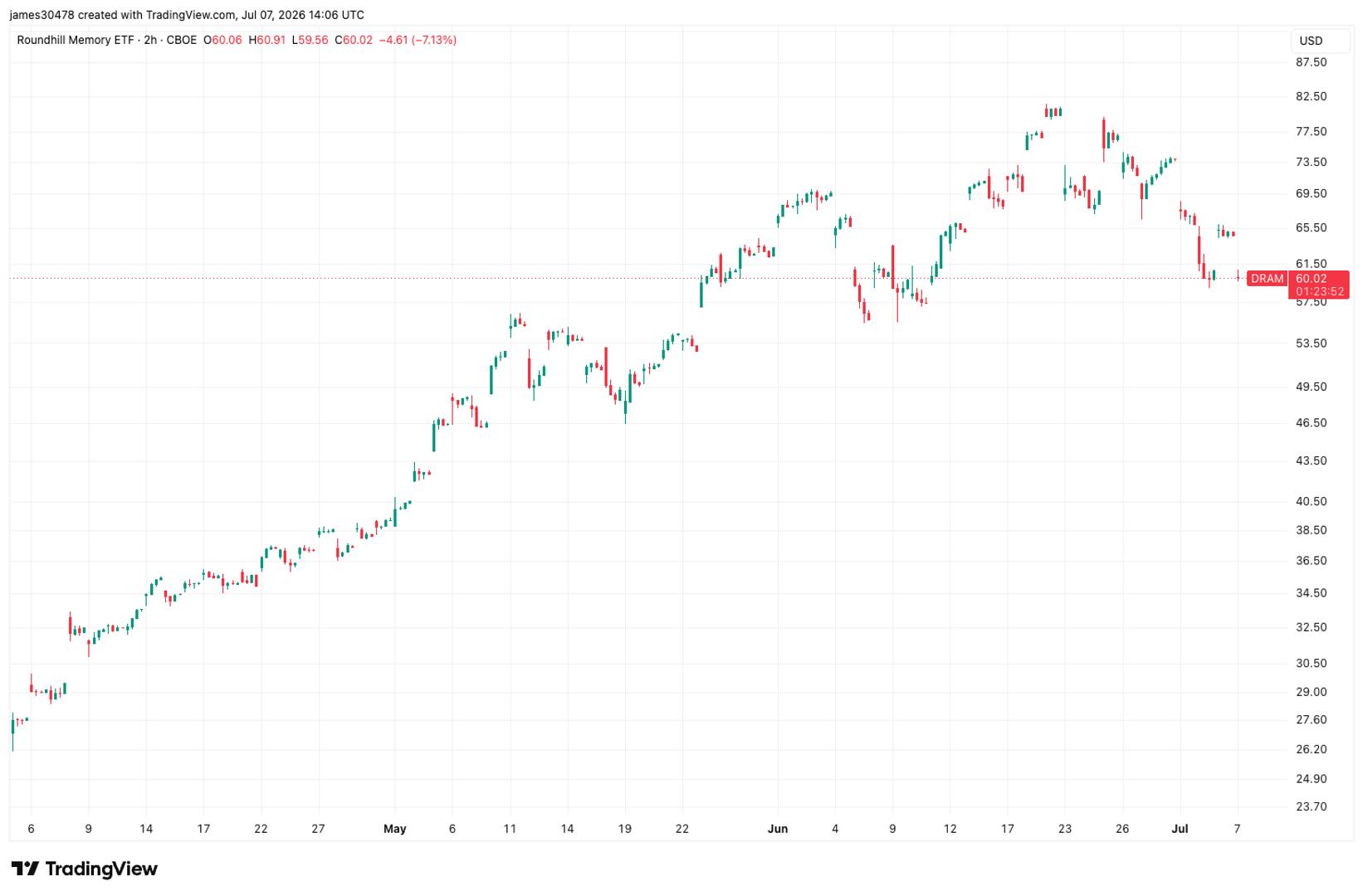
Semiconductor and memory stocks such as Micron Technology (MU) and Sandisk (SNDK) came under heavy pressure on Tuesday, after Samsung Electronics (005930) reported record second-quarter earnings but missed revenue estimates.
Shares still fell nearly 7%, extending a broader selloff across AI-linked chipmakers. Concerns are growing that hyperscalers could slow AI infrastructure spending.
Meanwhile, rival SK Hynix is down 25% from its all-time high ahead of its U.S. listing this week, a deal that is also drawing investor capital away from existing chip stocks.
Adding to the changing narrative, China's Zhipu AI, one of the country's leading artificial intelligence startups, is exploring a custom AI chip as demand for its open-source GLM models surges, highlighting the rise of lower-cost AI ecosystems built around domestic hardware rather than cutting-edge US chips.
The shift comes just weeks after SpaceX's blockbuster IPO and amid elevated valuations across AI-related stocks. Investors are increasingly questioning whether the next phase of AI will require ever more GPUs and high-bandwidth memory, or whether more efficient models will reduce demand for the infrastructure that has powered the AI rally.
Over the past year, bitcoin and the broader crypto market have suffered from the AI trade, and if investor enthusiasm for AI continues to fade, crypto bulls could see capital rotate back into digital assets.