Jul 4, 2026, 8:00 p.m.
2 min read

Summary
- New York Life Investment Management's Thomas Sy argues tokenization's biggest opportunity is personalized investing.
- Stablecoin adoption in payments is creating demand for institutional tokenized investment products that provide yield, he said in an interview with CoinDesk.
- Institutional DeFi needs market infrastructure to catch up, he added.
Tokenization advocates often point to faster settlement, around-the-clock trading and using the tokens in decentralized finance (DeFi) as the biggest advantages of bringing traditional assets onto blockchain rails.
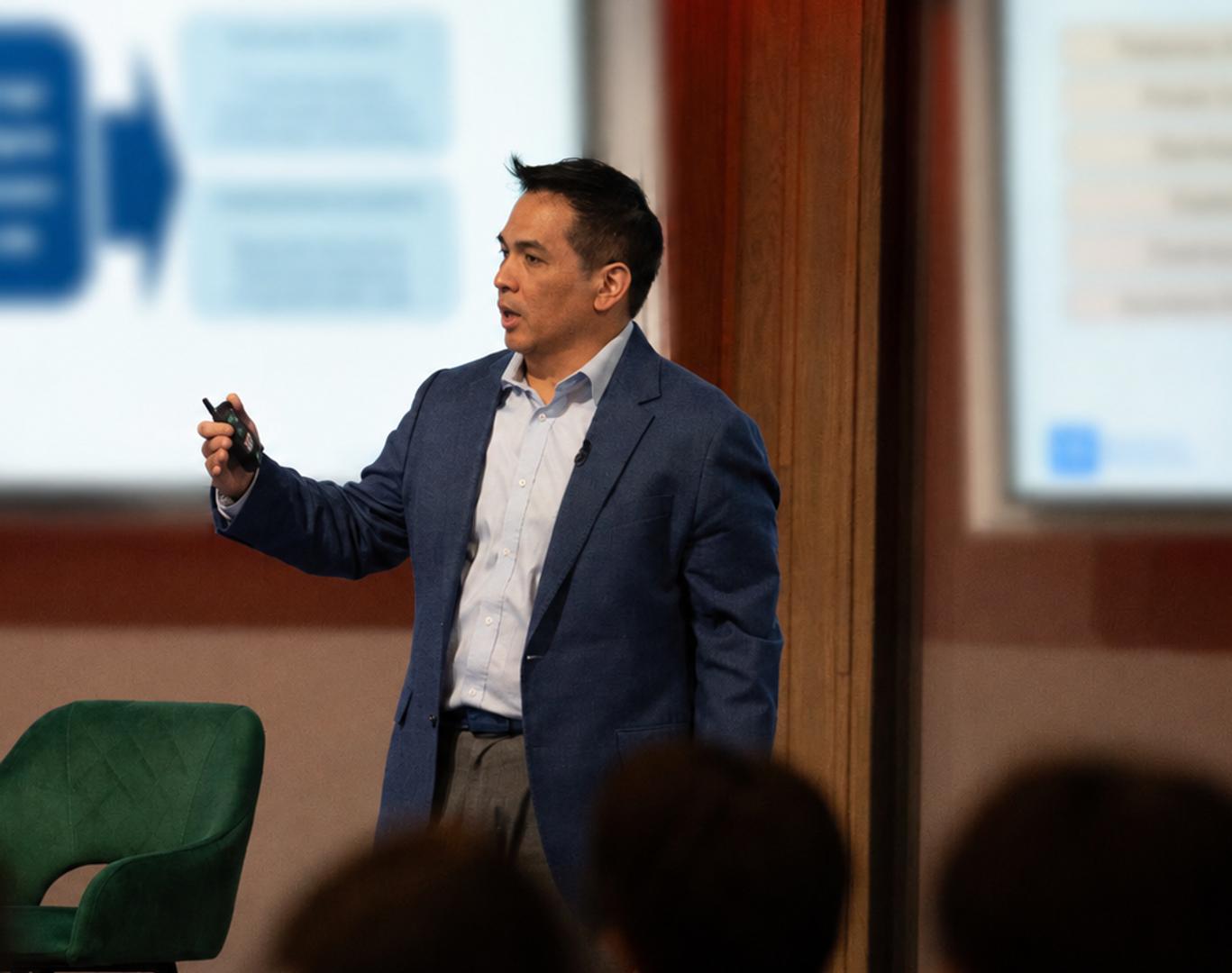
Thomas Sy, head of multi-asset solutions at New York Life Investment Management (NYLIM), said in an interview with CoinDesk that the technology's biggest opportunity lies elsewhere: rebuilding how investment portfolios are constructed.
The executive, whose team oversees about $11 billion within the $807 billion asset management arm of insurer New York Life, said blockchains could eventually allow asset managers to craft tailored portfolios to individual investors at a scale, something that today's financial system cannot.
"We believe that the future of asset management is going to be customization," Sy told CoinDesk. "The only technology that can help us get there at scale is the blockchain."
His view highlights a less-discussed use case for tokenization as Wall Street's blockchain efforts accelerate. Banks, asset managers and market infrastructure firms are increasingly issuing tokenized versions of money market funds, private credit and equities, betting that blockchain can modernize financial plumbing. The market for tokenized real-world assets could reach $5.5 trillion by 2030 from the current $30 billion, Citi projected.
NYLIM was the latest entrant to the list of asset management giants making moves in tokenization, teaming up with Centrifuge (CFG) to bring one of its high-yield corporate bond strategies onchain.
For NYLIM, tokenization is less about launching blockchain versions of existing funds than improving how portfolios are assembled.
Sy said customized investment strategies often combine ETFs, bonds, private credit and other assets, creating operational complexity that makes personalization difficult to scale.
"The end goal is to embed the customization within the asset itself, rather than the customization sitting around the operations around the different assets," he said.
Tokenization could also streamline transfer agency, settlement and other back-office processes, reducing costs that ultimately benefit investors.
"If you can bring that down by 10% or 20%, that's a better outcome for our clients," Sy said.
DeFi awaits
Sy said stablecoins have become the first practical bridge bringing traditional financial institutions onchain.
The stablecoin market has grown to over $300 billion, and its increasingly used for cross-brder payments
As banks, payment firms and fintech companies adopt stablecoins for cross-border payments and treasury management, many will eventually look for institutional-grade tokenized assets where those balances can earn yield instead of remaining in cash.
"Stablecoins were probably one of the biggest unlocks in the past two years," Sy said. "Adopting stablecoins was the gateway to get them onchain."
He expects that shift to broaden demand for tokenized investment products over the next several years.
NYLIM is also studying DeFi, though Sy said broader institutional participation will require more mature infrastructure, including tokenized collateral, central clearing and prime brokerage services.
"I do think there is a use case for [DeFi], but we need a little bit more time for it to institutionalize," he said.
- 1
- 2
- 3
- 4
- 5
- 6
- 7
- 8
- 9
- 10
Building the Zcash Machine: Tachyon and Quantum Readiness

Building the Zcash Machine: Tachyon and Quantum Readiness
Zcash’s Tachyon upgrade aims to scale shielded payments, improve quantum readiness, and test whether its funding, security, and governance can hold.
Jun 30, 2026
Zcash’s Tachyon upgrade aims to scale shielded payments, improve quantum readiness, and test whether its funding, security, and governance can hold.
Why it matters:
Zcash’s Tachyon upgrade aims to scale shielded payments, improve quantum readiness, and test whether its funding, security, and governance can hold.