
The next crypto user may start outside exchanges
For most of crypto’s history, new users followed a fairly standard path. They signed up on an exchange, completed identity checks, learned how wallets worked, bought their first cryptocurrency and only then started exploring decentralized applications (DApps).
It was rarely a smooth process.
Wallet addresses often looked intimidating. Seed phrases confused beginners and gas fees were hard to understand. Even buying a small amount of Bitcoin could mean using several platforms and dealing with unfamiliar ideas.
This process is slowly changing.
Instead of starting on an exchange or wallet app, tomorrow’s users may begin with a simple conversation. They could ask an AI assistant what Bitcoin is, how to buy it or how to send money abroad. The same assistant could then guide them through the steps or even help complete the transaction.
Recent developments suggest this future could arrive sooner than expected. MoonPay is now available inside ChatGPT for crypto-buying flows. At the same time, Coinbase’s Base ecosystem is building tools that allow AI assistants to work with wallets and blockchain applications.
The result could change how people first enter crypto space.
The next wave of onboarding may not begin inside exchanges or wallets. It may begin inside chatbots.
Crypto onboarding has long been a usability problem
One of crypto’s biggest challenges has not been the technology itself. It has been the user experience.
To experienced users, private keys, wallet addresses and blockchain confirmations may feel normal. To newcomers, they can seem intimidating.
Traditional onboarding asks users to learn several unfamiliar systems at once. They need to understand how exchanges, wallets, security tools and transactions work before they can use crypto with confidence.
This complexity has caused many mistakes over the years. People have sent money to the wrong addresses, lost access to their wallets and fallen for scams because they did not clearly understand the tools they were using.
The industry has spent years trying to make this process easier. AI is now becoming the latest attempt to solve that problem.
Did you know? Long before modern AI assistants, crypto users relied on simple Telegram and Discord bots to check prices, send alerts and carry out basic trades. Today’s AI-powered crypto assistants are far more advanced versions of those early tools.
ChatGPT becoming more than an information tool
Early AI assistants mainly helped users learn. They answered questions, but they did not complete actions. People could ask questions such as:
- What is Bitcoin?
- How do stablecoins work?
- What is a crypto wallet?
The chatbot would give clear answers, but the actual transaction still happened on another platform. That separation is starting to disappear.
New integrations allow AI systems to do more than explain crypto. They can now connect users directly to services for buying, transferring and using blockchain networks.
Picture a newcomer saying:
“I want to buy $100 worth of Bitcoin.”
Instead of sending the user to another site, the AI could create a purchase link, explain the steps and guide them through the full process.
The conversation itself becomes the onboarding process. For beginners, this may feel natural because it matches how they already use AI for everyday tasks.
When chatbots move from answers to actions
The next phase of AI-crypto integration goes beyond simple asset purchases. It is also about letting users manage more crypto tasks through chat.
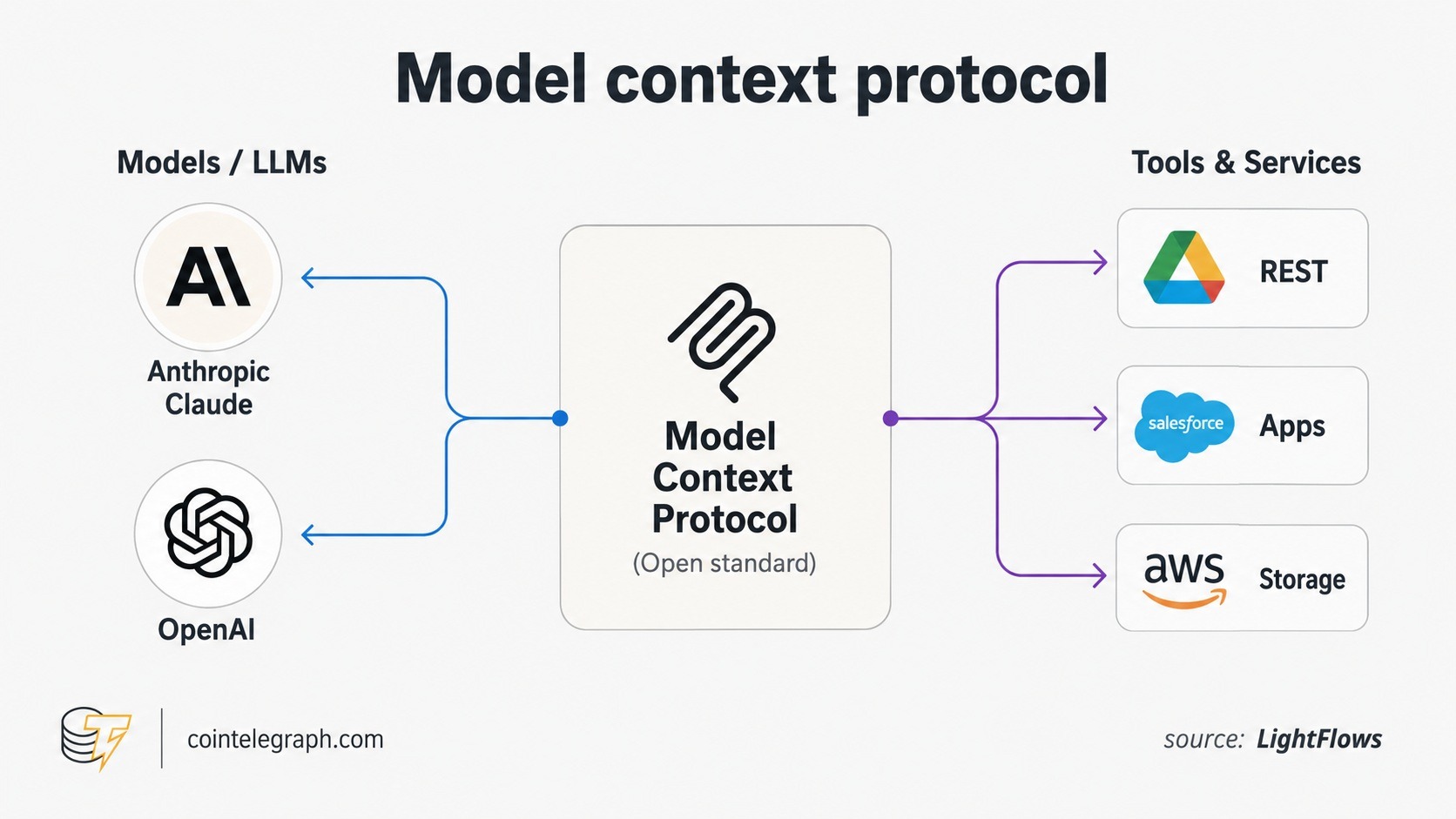
Projects like Coinbase’s Base Model Context Protocol (MCP) gateway aim to connect AI assistants with wallets, blockchain apps and other crypto services.
This could allow users to give instructions such as:
- Send 50 USDC to my friend.
- Swap ETH for USDC.
- Check my wallet balance.
- Find the cheapest route for a token transfer.
Instead of moving between different apps and websites, users would interact through normal language.
This follows earlier changes in computing. Users once had to remember command-line instructions. Graphical interfaces made that easier. Mobile apps made things simpler again.
AI assistants may be the next step. They could let people describe what they want to do instead of learning complex software steps.
Understanding MCP and its importance
Much of this change comes from MCP. It gives AI systems a standard way to connect with outside tools and services.
Instead of remaining standalone chatbots, AI assistants can now connect with databases, apps, wallets and other software systems.
MCP acts as a bridge between normal conversation and real action.
Without this kind of setup, AI systems can only provide information. With it, they can carry out tasks for users while keeping the right context.
For crypto, the value is clear. Blockchain apps often involve several technical steps in a specific order. MCP-supported systems can handle many of those steps automatically while the user stays inside a single chat window.
This could make AI the main layer people use to manage financial tasks.
When users no longer have to see the crypto layer
The biggest change may not be what users do. It may be what they no longer have to deal with directly.
Today’s crypto experience is still very visible. Users know they are dealing with exchanges, wallets and blockchains because they have to move through each layer themselves.
In a future shaped by AI, much of that complexity could move out of sight.
A user might simply say:
“Send $100 to my brother.”
The AI assistant could identify the steps, explain what will happen and show a clear confirmation before anything goes through.
The blockchain still runs. The wallet still exists. The user simply interacts with them through conversation instead of technical controls.
In this sense, crypto becomes less visible even as more people start using it.
Why this approach may appeal to new users
For new users, chat-based crypto tools could offer several practical benefits:
- They lower technical barriers.
- They explain things when users need help.
- They can guide users through unfamiliar steps one at a time.
- Most importantly, they feel familiar.
People already ask AI assistants for help with travel plans, meal ideas and work tasks. Asking the same assistant how to buy Bitcoin may feel like a natural next step, not a completely new behavior.
This could help crypto reach a wider audience.
Many people who once felt uneasy with traditional crypto apps may feel more comfortable using crypto through chat.
Did you know? Future crypto users may never have to copy a wallet address manually. Instead of pasting long strings of characters, they could simply tell an AI assistant who to pay while the technical details stay hidden in the background.
The trust issue nobody is talking about
Convenience also creates new problems. Earlier, users dealt directly with crypto platforms. They placed their trust in exchanges, wallets or blockchain networks.
In a chatbot-based setup, much of that trust shifts to the AI assistant. The chatbot becomes the main point of contact. Users may start accepting its suggestions simply because they sound clear and confident.
Most people have limited knowledge of blockchain technology. They also know little about how large language models work.
As a result, they may rely too heavily on systems they do not fully understand. The main concern is not always bad intent. It is overreliance.
A chatbot can make decisions feel so simple that users stop questioning the actions they approve.
What happens when AI makes a mistake
AI systems are still far from perfect. Mistakes, misunderstandings and inaccurate answers remain common.
In most cases, these issues may cause little harm if the person using AI reviews the output carefully. A wrong historical detail or a weak suggestion can usually be caught before it creates a major problem.
Financial transactions are different. A mistake involving wallet addresses, token symbols or transaction details could easily lead to financial losses.
Even small errors can matter in blockchain systems, where transactions are usually final and cannot be reversed. That is why human review remains important.
AI can be a useful assistant, but users must still check what they are authorizing. Convenience cannot replace careful review.
New security concerns in AI-enabled crypto tools
As AI starts connecting directly with wallets and financial tools, new risks come with it.
Bad actors may try to influence AI systems through prompt injection. Malicious plugins could abuse trusted connections. Scammers may use AI-generated conversations to make scams seem more believable.
These risks are not limited to crypto, but the financial impact can be much higher here. A wrong answer from a chatbot is one problem. A wrong transaction is another.
Security becomes more important as AI moves from giving advice to taking action. The industry will need to keep these tools easy to use while still building strong protections.
Could AI replace exchanges as crypto’s main entry point?
One major question is whether exchanges could slowly move into the background as support systems.
Users rarely think about the servers behind their favorite websites. They simply use search engines, browsers and apps. A similar change could happen in crypto.
Exchanges may still provide liquidity and carry out trades while AI assistants become the visible face of the system.
If that happens, control of the user experience could matter more than control of the technology behind it. Companies that shape the conversation may gain more influence over how people find, access and use crypto services.
How AI agents could change automated finance
The link between AI and crypto goes far beyond human users. Developers are now building AI agents that can interact with financial systems on their own.
Over time, these agents could handle subscriptions, adjust investment portfolios, make payments and use decentralized finance protocols with limited human input.
Crypto networks are well suited for this kind of activity. They are programmable, available worldwide and open around the clock.
Fully independent financial agents are still a developing idea, but the basic tools are already being built.
Together, AI and blockchain may one day support financial systems where machines interact directly with other machines.
This article is produced in accordance with Cointelegraph's Editorial Policy and is intended for informational purposes only. It does not constitute investment advice or recommendations. All investments and trades carry risk; readers are encouraged to conduct independent research before making any decisions. Cointelegraph makes no guarantees regarding the accuracy or completeness of the information presented, including forward-looking statements, and will not be liable for any loss or damage arising from reliance on this content.