Updated Jul 29, 2026, 11:13 p.m. Published Jul 29, 2026, 11:12 p.m.
6 min read

Summary
- The two U.S. senators who have been working on a compromise to satisfy all sides in the crypto Clarity Act’s ethics push have finalized their approach, sources say, though the details haven’t yet emerged.
- Senators Thom Tillis, a Republican, and Ruben Gallego, a Democrat, took on the task when it became apparent that the White House-approved section governing crypto conflicts of interest for senior U.S. officials wasn’t going to satisfy most Democrats.
- If their effort works, the Clarity Act has scant time to make it through the Senate’s arcane voting process if it’s going to become law this year.
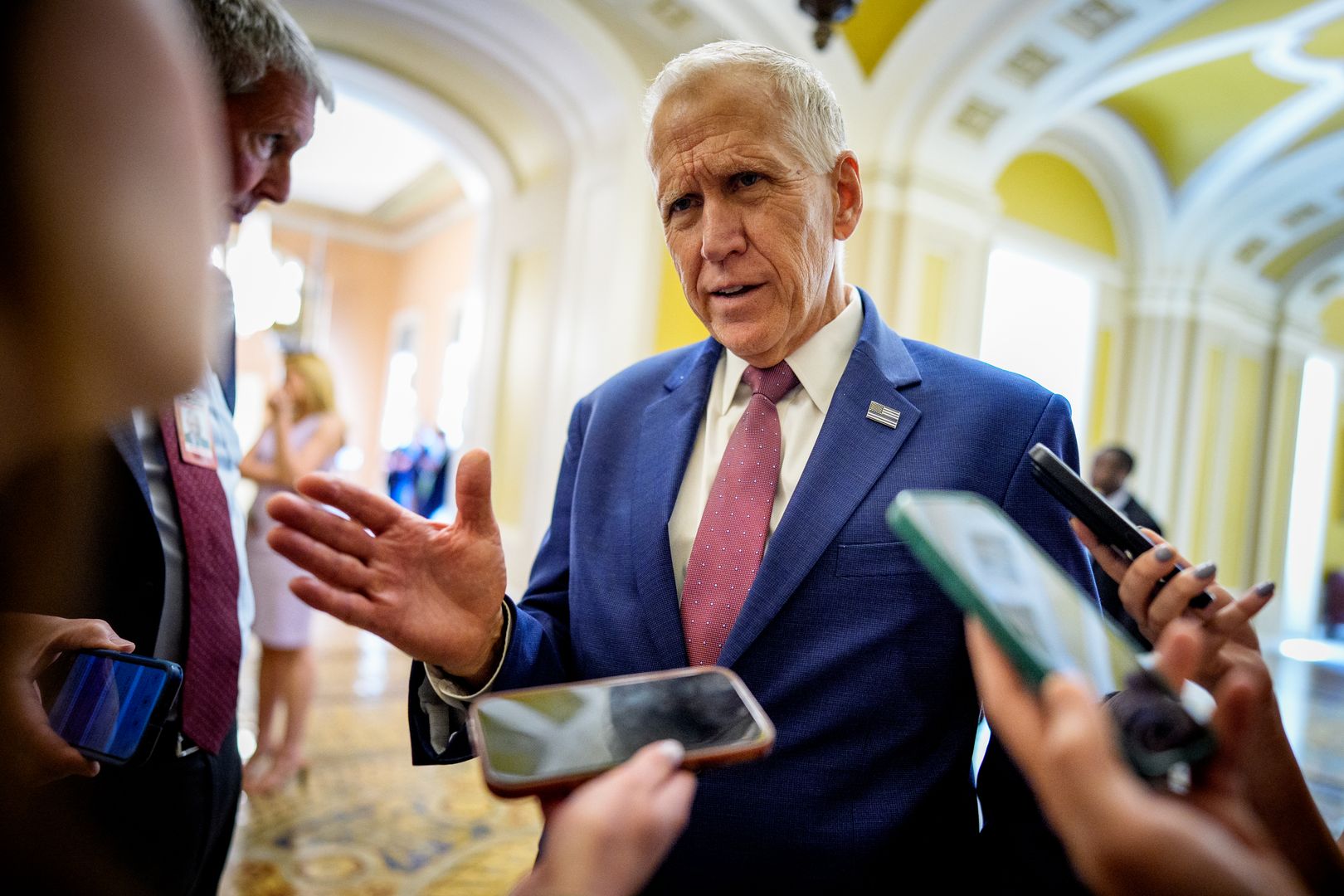
The crypto market structure bill's future could depend on the reception of legislative language hashed out by Senators Thom Tillis and Ruben Gallego, according to people briefed on the effort who say the initial job is done to revamp the part of the bill that would limit government officials from direct ties to cryptocurrency projects.
It's unclear who has seen the latest effort from the bipartisan duo that's been trying to negotiate a final acceptable compromise, but it would need to get approval from the White House and buy-in from a lot of Democrats before the Digital Asset Market Clarity Act can knock down its final dominoes and get to a vote in the U.S. Senate.
The ethics piece has President Donald Trump's crypto business empire squarely in mind as it seeks to ban senior government officials from direct ties to the industry. Trump recently agreed to accept a narrow version of this concept, surprising some crypto insiders with his willingness, and the White House hailed it as an unprecedented ethics constraint that directly affects the president. But Democratic opponents argued it's structured in such a way that Trump won't have to do much — if anything — to comply, and that he won't have enforcement worries from a Department of Justice led by his appointed loyalists.
Republican Tillis and Democrat Gallego agreed to try bridging the gap, and the people said the lawmakers indicated they've struck new common ground, though they didn't share any details. Crypto industry lobbyists are eagerly watching the result, because time is running out before the Senate breaks for its August recess, and they contend that finishing the government conflicts-of-interest section is likely to provide momentum to knock out the rest.
Spokespeople for the senators and White House didn't immediately respond to requests for comment on the status of the ethics negotiation.
Hit after hit
Though the Clarity Act has taken hit after hit in congressional deliberations, it's still moving, like the John Wick of legislation. But it's reached its climactic scene as the Senate heads toward its final week of business before its summer break.
There are two timelines at war, now. First, the Senate's own calendar is famously difficult to negotiate, with any contentious bill requiring days of floor time. Each passing hour narrows the legislation's odds as just seven days remain before the recess, when senators will leave Washington and largely shift focus to the consequential midterm elections bearing down on them.
The other time crunch has been the clock ticking on the negotiating table, where the two parties and the White House are still working to round up the necessary 60 votes. Their final effort must win over a lot of resistant Democrats and a few reluctant Republicans.
Crypto lobbyists are fervently hoping that negotiators — especially Tillis and Gallego — can find a workable middle ground, circulate the refurbished bill again and watch it advance through the Senate voting process. At this point, Senate Majority Leader John Thune's prediction remains sturdy: The bill almost certainly doesn't have enough time to finish the Senate's multi-stage process before the break.
But if it were to get started and potentially clear an initial 60-vote hurdle before next week is out, that could be enough to get it on a winning path. To give that possibility its best chance, the industry would want to see Thune roll out the first motion before the end of the week on what's called "cloture," the procedure that sets a bill up for votes.
Cloture?
Cloture timing is complicated and somewhat flexible, but it involves multiple votes stretched over days, some of which must be conducted as the sole focus of the Senate, without any other business afoot. It concludes with a 30-hour period of debate and a final vote. That said, the Senate already has some other live cloture situations, including for its Russia sanctions bill — Thune's first priority — and the current package of federal nominations in need of confirmation.
Clarity is one of several pre-break priorities hanging around the Senate at the moment. Anything not completed by next week is shunted toward another brief window of a few weeks in September in which the Senate must finish everything that needs to get done before the members face voters in November, potentially including a federal budget process to keep the government open.
The crypto bill will have a best chance at seizing some of that time if it's already built cloture momentum next week. Though Thune is well aware that the bill hasn't yet struck its bipartisan sweet spot.
"We will probably have a vote on the Clarity Act," Thune said in an interview Tuesday on Fox News, though he offered a caveat that it may depend on a shifting sentiment from Democrats. "We'll see if the Democrats give us the votes to get on that."
If Thune is otherwise forced to push a Clarity Act vote next week on a version that Democrats have said they'll oppose, it'll likely be a political strategy to force them to go on-the-record with that opposition as the November elections loom. And it might spell an irreparable rift in negotiations.
"After nearly 11 months of giving almost everything asked of us, I genuinely don't know what else my Democrat colleagues need before we act," Republican negotiator Senator Cynthia Lummis said in a Wednesday posting on social media site X.
Sticking points
So what else are they still working on? The language of the Clarity Act has been through a lot of talks and compromises in its various permutations through the last couple of years, but the parties at the negotiating table have reached a relatively narrow division that focuses on a few matters, including what's commonly known as the "ethics" provision, some illicit-finance protections that have potentially heavy implications for decentralized finance (DeFi) and — the issue that never goes away — the allowance of stablecoin rewards programs.
The details of the ethics section's latest compromise effort haven't yet emerged. Some Democrats have hosted recent anti-Clarity press events and a hearing to explain their opposition, though the significantly tougher restrictions they demand aren't likely to find any legislative compromises.
While the government conflicts-of-interest section has drawn the brightest spotlight, the insistence among DeFi advocates that the bill shield developers from being treated as regulated money transmitters remains a point of debate. Some law enforcement groups have backed off of their earlier opposition on that point, though Democrat Senator Catherine Cortez Masto has continued to try to strengthen the illicit finance protections.
Patrick Witt, the White House's crypto adviser, hasn't been concealing his frustration, posting on social media that his side has "made our position abundantly clear to Senator Cortez Masto for weeks."
And the American Bankers Association has been lobbying again on the stablecoin yield topic that was the first major dispute to derail the Clarity Act's progress at the start of the year. The bankers still insist that the compromise version (meant to stop stablecoin issuers from offering rewards that look like interest on bank deposits) didn't get the job done. They want the final bill "to ensure that the prohibition on stablecoin interest and yield cannot be evaded through rewards, incentives, or other arrangements that are substantially similar to interest payments," according to a Tuesday letter to the Senate leadership.
Witt countered in a Wednesday post on X that the negotiation had already answered that concern."Make it make sense," he concluded in frustration.
When Thune predicted the Clarity Act wasn't likely to pass the Senate by next week, Witt argued that there was still time to make it happen in the closing days until August 7 (which in grocery terms is akin to Clarity's sell-by date, after which its success becomes rapidly less certain.) But many in the industry are quietly shifting their hopes to September.
"Clear rules are almost here," said Coinbase CEO Brian Armstrong in a Wednesday post on X. "We're at the one yard line."
If Clarity doesn't pass in September it's a longshot that anything happens in the so-called lame duck session sandwiched between the elections and the next congressional session. If Democrats win the U.S. House of Representatives majority — and potentially the Senate, though that's a tougher goal — they're not likely to accept the Clarity work largely driven by Republicans. So the bill could return to the drawing board.
Read More: U.S. Senate puts off crypto Clarity Act for now as it focuses limited bandwidth elsewhere
- 1
- 2
- 3
- 4
- 5
- 6
- 7
- 8
- 9
- 10
Anvil: The Missing Collateral Layer

Anvil: The Missing Collateral Layer
Anvil is a shared on-chain collateral layer built on a programmable letter of credit: reserve assets as a guarantee -no loan, no interest, keep custody & yield.
9 hours ago
Anvil is a shared on-chain collateral layer built on a programmable letter of credit: reserve assets as a guarantee -no loan, no interest, keep custody & yield.
Why it matters:
Anvil is a shared on-chain collateral layer built on a programmable letter of credit: reserve assets as a guarantee -no loan, no interest, keep custody & yield.