In brief
- Zhibao Technology signed a non-binding term sheet with Joyertech and Information OPC for a PIPE financing deal involving roughly 3,500 Bitcoin, worth approximately $220 million at current prices.
- The buyer would designate a majority of Zhibao's board of directors at closing, effectively taking control of the company while current management continues running day-to-day operations.
- Zhibao received a Nasdaq deficiency letter on July 15 for trading below $1 per share, and its stock briefly doubled after the Bitcoin treasury announcement.
Zhibao Technology Inc., a Nasdaq-listed Shanghai-based company that sells digital insurance products in China, announced Wednesday that it has signed a non-binding term sheet to receive roughly 3,500 Bitcoin as payment in a proposed stock sale. The deal would be worth approximately $220 million at current BTC prices.
According to the company's press release, "the Buyer (or its designated entity) intends to subscribe for securities in a proposed PIPE financing of the Company, with consideration expected to include approximately 3,500 Bitcoin, subject to final valuation, custodial arrangements, audit verification, regulatory review, Nasdaq compliance, and the execution of definitive agreements."
A PIPE, or private investment in public equity, means a private buyer purchases shares directly from a publicly listed company rather than on the open market. In this case, the buyer, a firm called Joyertech and Information OPC, would pay for those shares not in cash but in Bitcoin.
Who's actually in charge here?
The deal comes with a catch that goes well beyond a simple Bitcoin buy. Per the term sheet, "the Company intends to maintain its existing operations while the Buyer is expected to designate a majority of the members of the board of directors at the closing of the PIPE financing." That means Joyertech would effectively take control of the company.
Zhibao, which trades as ZBAO on the Nasdaq, describes itself as "a leading high-growth InsurTech company and pioneer of the 2B2C digital embedded insurance model in China." The company launched what it calls the first digital insurance brokerage platform in the country back in 2020, powered by its own platform-as-a-service—a cloud-based system that other businesses plug into to offer insurance products to their customers.
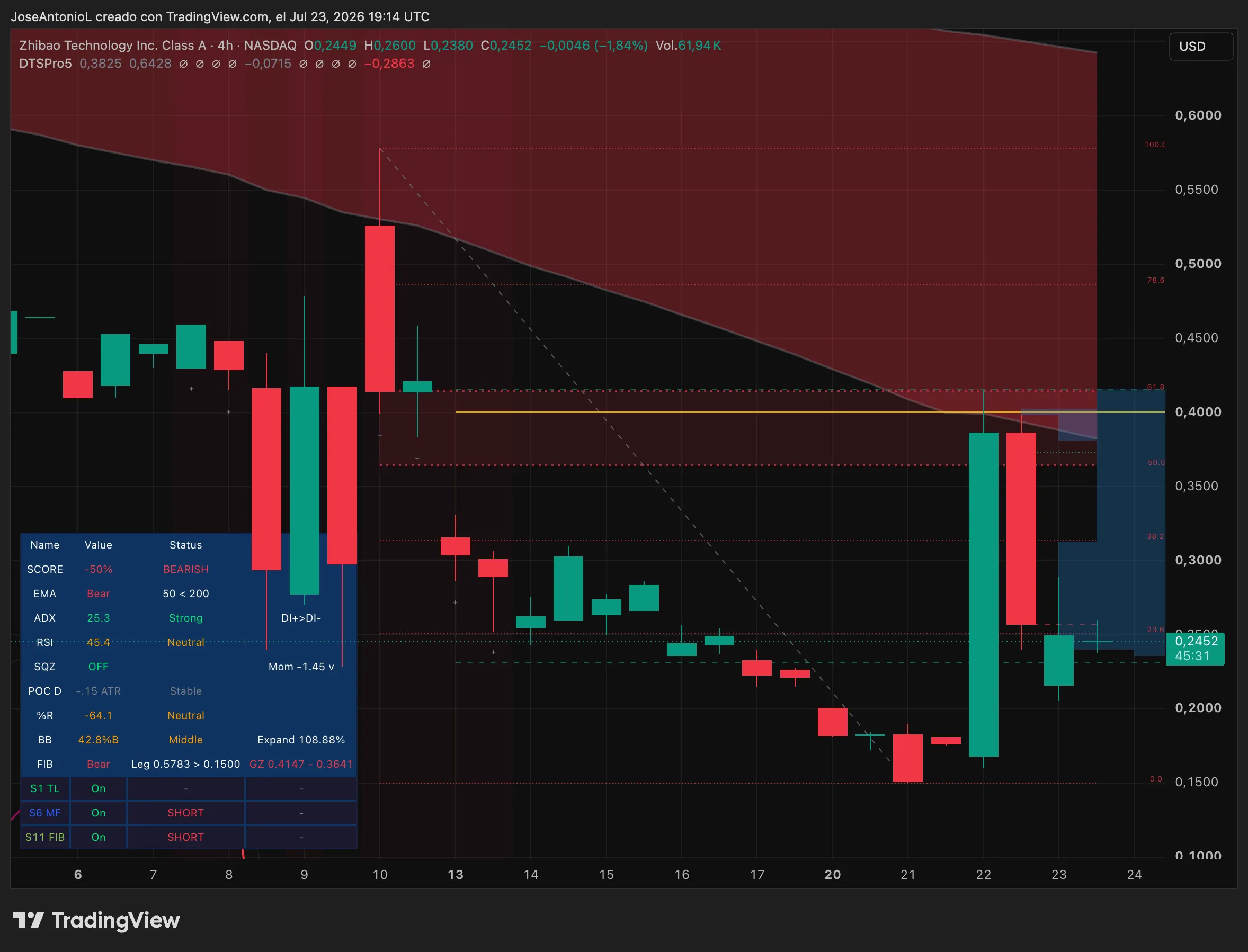
Just one week before this announcement, on July 15, Zhibao disclosed it had received a deficiency letter from Nasdaq for trading below $1 per share. The stock was hovering around $0.22.
Hours after the announcement the stock price skyrocketed from $0.15 to $0.40, which is more than 2X in less than four hours. The momentum receded as the hour passed and the stock settled in around $0.24—a sharp correction, but still around a 60% gain.
A familiar playbook
The structure is becoming common. Rather than raise cash and then buy Bitcoin on the open market—the way companies like Strategy (formerly MicroStrategy) did starting in 2020—Zhibao would take the Bitcoin itself as payment. That seats a treasury on its balance sheet from day one.
Based on the deal, the current team sticks around only temporarily. The press release states that "the current management team is expected to continue overseeing the day-to-day operations of the legacy business" until a later "separation, disposition, or other restructuring," happens. In plain English: the founders run the insurance side until the new owners decide what to do with it.
The Bitcoin treasury trend has flooded Wall Street over the past two years, with firms large and small remaking themselves around BTC holdings. More than 150 publicly traded companies now hold Bitcoin on their balance sheets. This hasn’t always worked out favorably though.
While many of these publicly traded companies turned digital asset treasures, or DATs, initially experienced sizable paper gains and skyrocketing stock prices following initial announcements, the hype around crypto treasuries faded as the bear market set in. Just days ago, one such company—the U.K.-based Satsuma Technology—announced it would sell off its remaining Bitcoin, refund investors, and shutter operations.
Meanwhile, for Zhibao, none of this is final. Zhibao's own filing emphasizes that the term sheet is non-binding, and the proposed transaction "remains subject to, among other things, the completion of satisfactory legal, financial, and operational due diligence, the negotiation and execution of definitive agreements, applicable corporate and regulatory approvals, compliance with Nasdaq listing requirements, and the satisfaction of other customary closing conditions."
Zhibao has 180 calendar days—until January 6, 2027—to regain compliance with Nasdaq's minimum bid price requirement of $1 per share.
Daily Debrief Newsletter
Start every day with the top news stories right now, plus original features, a podcast, videos and more.