
Power over tokens: Why AI is changing crypto valuations
For a long time, the value of crypto companies was closely tied to traditional indicators such as trading volumes, digital asset holdings, mining income and assets under management.
Investors generally judged these firms by their exposure to Bitcoin, Ether and the broader growth of blockchain technology.
That view now appears to be changing.
In June 2026, shares of Galaxy Digital rose sharply as investors focused on a different part of the business: artificial intelligence infrastructure. The rally drew attention to a pattern taking shape in public markets. Some crypto companies are finding that Wall Street may value their access to power, land and data centers more than their traditional crypto activities.
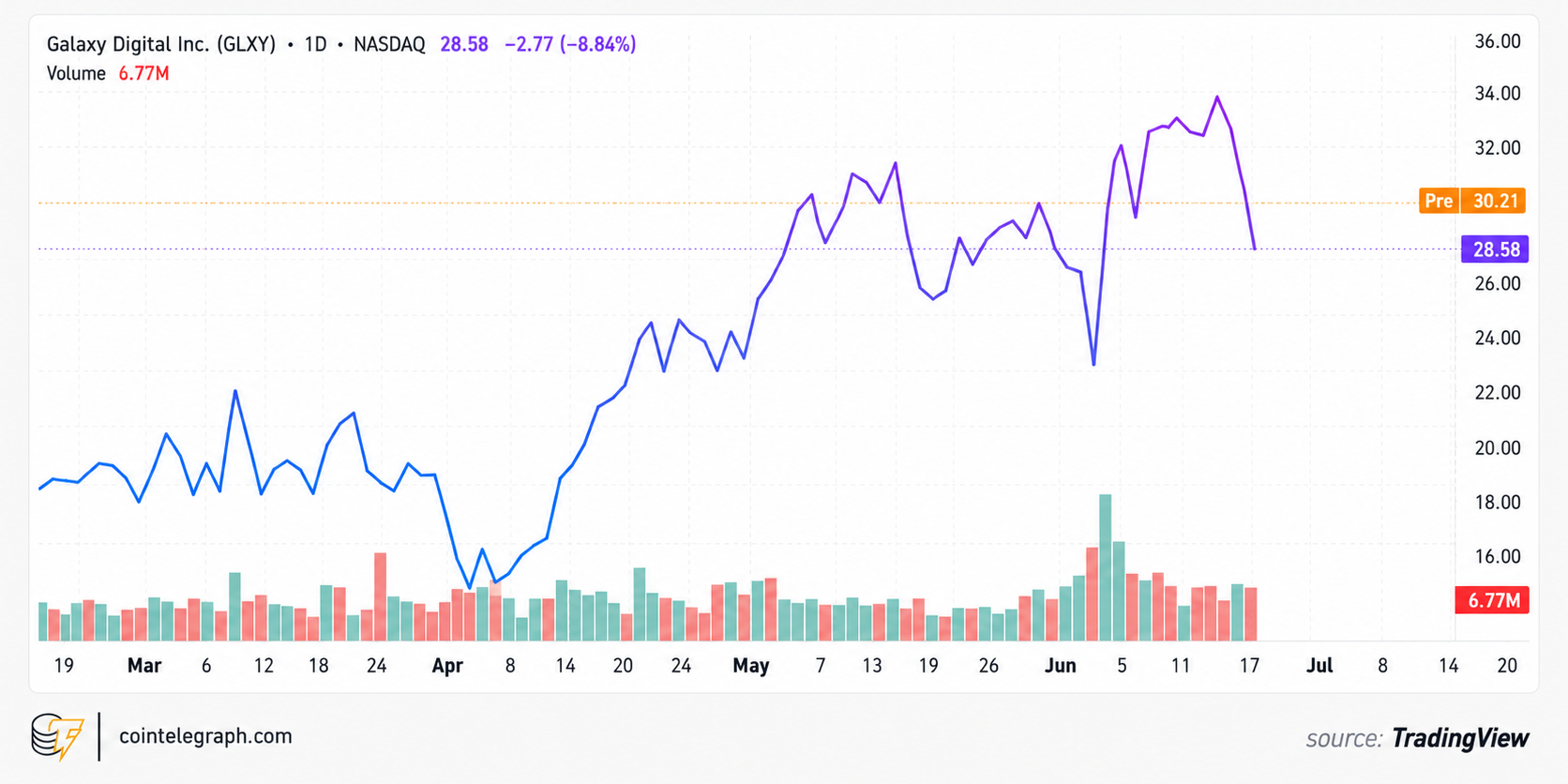
This shift points to a bigger change in financial markets. As demand for artificial intelligence grows, the infrastructure needed to support AI models has become one of the world’s most valuable resources. In some cases, crypto firms already control the exact assets that AI companies want.
The Galaxy Digital rally that caught crypto investors off guard
Galaxy Digital has long been a major player in digital assets, with businesses across trading, asset management, venture investments and blockchain infrastructure.
Yet the driver of its recent share price increase was not Bitcoin prices, ETF inflows or wider crypto trading activity.
Instead, investors focused on the company’s Helios campus in Texas. The site is a major data center project being developed for artificial intelligence and high-performance computing.
Comments from Galaxy Digital’s management suggested that Helios could eventually make up a meaningful share of the company’s total value. Market observers appeared to agree. Instead of viewing Galaxy Digital only as a crypto firm, investors began to assess it as an AI infrastructure company.
The rally showed a clear change in how investors value some crypto businesses. A company built on digital assets suddenly gained market attention for its possible role in the AI sector.
Did you know? Bitcoin miners once competed for cheap electricity. Now AI companies are competing for the same resource. In many regions, access to power has become more valuable than access to graphics processing units (GPUs) themselves. Some utilities have reported years-long waiting lists for large AI data center projects seeking grid connections.
Why AI infrastructure is now so valuable
The rapid growth of artificial intelligence has created a new bottleneck. The main challenge is no longer just building more advanced AI models. It is also securing enough computing capacity to train and run them.
Modern AI systems need large numbers of GPUs, specialized networking equipment, advanced cooling systems and huge amounts of electricity. Building the sites that house this equipment is now one of the most expensive projects in the technology sector.
As a result, investors are paying more attention to the companies that provide this core infrastructure, not just the companies building AI applications.
Data centers have become essential tools for AI growth.
This explains the strong investor interest in infrastructure-focused companies. Businesses that control power supplies, grid connections and large computing sites hold assets that are difficult and expensive to copy.
To Wall Street, those qualities often point to long-term revenue potential and more stable financial returns.
Why some crypto companies are well positioned
Some crypto companies are well positioned because they already share key infrastructure needs with the AI sector.
At first glance, crypto operations and artificial intelligence may seem like completely different fields. Yet both depend on one essential resource: massive computing capacity.
Over time, Bitcoin mining operations and other crypto infrastructure businesses invested heavily in sites built for high power demand. They acquired suitable land, secured power supply agreements, installed advanced cooling systems and connected directly to electrical grids.
These same resources are now attracting interest from AI companies.
An AI data center is not the same as a crypto mining operation. Still, the two share several core requirements, including high electricity use, large physical sites and enough space for specialized equipment. This overlap has created an unexpected opportunity.
In some cases, AI operators can work with existing facilities that were first built for crypto. That can help them avoid the cost and delay of building new sites from scratch.
As a result, some crypto firms now hold valuable assets in the growing AI infrastructure market.
Helios and Galaxy Digital’s changing strategy
Galaxy Digital’s Helios campus shows how infrastructure originally tied to Bitcoin mining can be redirected toward AI computing. After acquiring the site from Argo Blockchain in 2022, Galaxy Digital began shifting Helios toward high-performance computing and AI data center services.
That strategy gained more support when AI cloud provider CoreWeave entered into agreements tied to the site. Those deals suggested that major AI companies saw strategic value in the infrastructure.
Long-term AI infrastructure agreements can create steady revenue streams that are easier to forecast than income from crypto trading. Instead of relying on sharp market swings, companies can secure cash flow through multi-year contracts.
That level of stability is attractive to public market investors.
Did you know? Training and running advanced AI models requires huge computing resources. That is pushing developers to search globally for locations with abundant and reliable energy.
The rise of crypto-AI hybrid companies
Galaxy Digital’s Helios strategy is not an isolated case. Across parts of North America, several crypto mining and digital infrastructure companies have started pursuing opportunities in AI hosting, cloud services and high-performance data center operations.
This points to a wider change in how financial markets classify these businesses. In the past, crypto companies were often viewed as high-risk businesses tied closely to digital asset prices.
Now, some investors are separating infrastructure assets from direct crypto exposure.
A company that controls hundreds of megawatts of power capacity may attract a different valuation approach than one that depends mainly on trading revenue. This has created a new type of business: the crypto-AI hybrid.
These companies remain active in digital assets, while more of their value comes from infrastructure that can support several industries.
Why Wall Street favors AI revenue
The market’s preference becomes clearer when looking at the economics of the two areas. Crypto revenues often vary sharply over time.
Trading volumes rise and fall with overall market sentiment. Asset management fees move with crypto valuations. Mining profits change based on network difficulty and token prices. By comparison, AI infrastructure revenue can look more like revenue from traditional utility or real estate businesses.
Companies sign multi-year contracts. Income becomes easier to predict. Financial forecasts become simpler to prepare. Institutional investors usually value this kind of consistency.
A long-term lease with an AI client often carries lower perceived risk than relying on future crypto market momentum. As a result, businesses tied to AI infrastructure can command higher valuation multiples.
This does not mean investors have turned away from crypto. Instead, they may see AI infrastructure as a more reliable base for future income.
Could the market be getting ahead of itself?
Even with the current optimism, there are still reasons to be cautious. The rise of AI infrastructure has created strong excitement, leading some analysts to question whether too much capacity could eventually be built.
Past technology booms offer many examples of early overinvestment. Railroads, telecommunications networks and early internet infrastructure all went through periods of excess development before demand caught up with supply.
AI infrastructure could face a similar risk if capacity grows faster than demand.
If demand grows more slowly than expected, some data center projects may struggle to reach the occupancy levels investors are now expecting.
Execution risks also remain. Converting facilities originally built for crypto into AI-ready sites requires major capital spending and specialized expertise. Not every company will manage that transition well.
Investors must therefore balance real opportunities against the risk of overexcitement.
Did you know? Companies building AI infrastructure are increasingly negotiating energy contracts directly with utilities, renewable power developers and even nuclear operators to secure long-term electricity supplies.
What this means for crypto investors
The impact reaches well beyond Galaxy Digital. Investors assessing crypto-related stocks may need to look beyond digital asset exposure.
Factors that once centered mainly on crypto now include infrastructure questions:
- How much power capacity does the company control?
- Does it own land in strategic locations?
- Can its facilities support AI workloads?
- Are major technology firms interested in leasing its infrastructure?
- How diversified are its revenue sources?
In some cases, these factors may matter as much as Bitcoin holdings or trading volumes.
This points to a changing valuation approach, where physical infrastructure carries more weight than digital assets alone.
The new reality: Power may matter more than crypto
Galaxy Digital’s share price increase highlighted a clear change in the market.
Wall Street is placing serious value on the infrastructure needed to power artificial intelligence. Data centers, reliable electricity supplies and computing resources have become strategically important assets.
Some crypto companies already control these resources after spending years building them for mining and blockchain operations. As AI demand grows, investors may begin to see these assets as more valuable than traditional crypto businesses.
For companies like Galaxy Digital, the path ahead may no longer depend only on Bitcoin, trading operations or asset management. The bigger source of value could be something more physical: access to power, land and the computing infrastructure needed to support the next wave of artificial intelligence.
This article is produced in accordance with Cointelegraph's Editorial Policy and is intended for informational purposes only. It does not constitute investment advice or recommendations. All investments and trades carry risk; readers are encouraged to conduct independent research before making any decisions. Cointelegraph makes no guarantees regarding the accuracy or completeness of the information presented, including forward-looking statements, and will not be liable for any loss or damage arising from reliance on this content.